Showing posts with label books. Show all posts

Thursday, April 16, 2009

The Little Book turns 50!

The Elements of Style by Strunk & White was first published 50 years ago today and has sold over 10 million copies. E.B. White, famous author of Charlotte's Web, was a student of Cornell University Professor Strunk, who first put down his rules for writing in 1918 in a self-published "little Book" also named The Elements of Style. White revised and expanded it after Strunk's death -- so much of the book is really more like 90 years old today!

Isn't it amazing that this classic is still in wide use today? The books appeal is surely due to it's simplicity and call for brevity. One of the most important tenets is "Omit needless words". What else can I say?

You can find an online version of Strunk & White at bartelby.com/141

Monday, April 13, 2009

Garden vs. Nature

I'm currently re-reading yet another Michael Pollan book (I've blogged about In Defense of Food and Omnivore's Dilemma, and my son just reviewed Botany of Desire -- all are excellent books I highly recommend). Don't worry, hubby, I don't have a crush on him (just google the author and you'll understand), but he's a darn good writer!

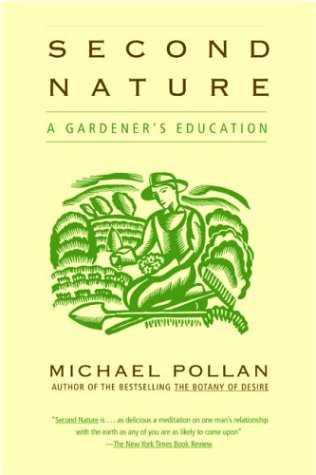
Pollan's Second Nature --a Gardener's Education is a sociological look at the relationship between humans and their attempts to control nature in their gardens. It's an interesting exploration not only to gardeners -- however, I find it's not quite as powerful a book as some of his others.
Pollan describes of his own influences, from his master gardener Russian-immigrant grandfather to his own father who refused to conform and mow his lawn, which made me reflect on my own influences -- I too had a grandparent who loved plants, and a father who saw yardwork as rather a chore (but was much more of a conformer). But perhaps an even stronger influence on me was my Onkel Max, who could be described as both a gardener and a true naturalist.

Max was not my real uncle, but rather, he and his wonderful wife, Hete, sort of "adopted" my parents when they arrived in Chile with their young family in the 1960's. Like many Germans there, Max's family had moved to South America several generations ago. Max really knew and loved nature -- he had bought a small plot of land in Granizo, in the dry countryside of central Chile. He and his family built a small stone cottage for a weekend get-away, and he planted an orchard full of apples, peaches, avocados, and citrus. Any agriculture in central Chile requires irrigation and hard work. What grows naturally around there are dry "bosques", full of such plants as the spiny espino. To most European immigrants, this ecosystem was just a worthless semi desert in need of "improvements", but Max loved this land.

I remember as a little girl tagging along with him when he checked on his orchard, plus the various cactus and other native plants growing around his place -- he had relocated some of them from where the orchard was planted. Max was also the warden for the adjacent plot of land belonging to the DAV (German Hiking Club), so we'd often wonder all over the woods, and he'd tell me about the plants growing there -- oh how I now wish I'd still have that actual knowledge -- I forgot that as quickly as any child would, but he did instill in the 5 or 7 year old that these plants and these ecosystems mattered.

Once a year, during the 4th of July equivalent, Chilean Independence Day, the German-Chilean community of the DAV had a large gathering for the "Spiessbraten", which is basically a feast of goat-roasting and beer-drinking. We kids loved this -- we basically were just free to run around all over, barely supervised. Moms were busy peeling potatoes while gossiping, making huge quantities of German potato salad, while dads were turning the spit over the fire (ahhhh, the smell is delicious) for hours upon hours while drinking quite a bit of cerveza and perhaps schnaps too.
I was roaming around the woods when I discovered our dentist, upstanding citizen and hobby gardener, digging up one of Uncle Max's prized native plants. The good(?) doctor tried to swear me to secrecy (it's only a local weed)-- but alas, I didn't feel this was right. Knowing how much Max cared about his plants, I reported the infraction, and Max promptly confronted the Doctor -- I don't think it came to blows, but it was a big deal! Max carefully replanted the stolen property, and probably told me how this plant may not survive having been dug up on a hot day during the growing season...

It was not only my first lesson in how some of the adults in my world can be less than honest, but also in the importance of respecting native plants and the ways of nature. And it it probably right there, in Granizo, where I started being a fledgling naturalist.

Max passed away in 1992, and it so happened that I was visiting Chile then, for the first time since my family moved back to Germany in 1970. My father and I had visited Max and Hete shortly before his death, and we attended his funeral. I visited Chile again about 10 years later, and spending time in Granizo (which now belongs to his son) is always the highlight -- somehow this dry landscape is still "home", and my image of "garden" is the fertile irrigated plot of land full of flowers, vegetables, grape vines and fruit trees in Central Chile.

Saturday, April 11, 2009

Guest Book Review

My son wrote this book review for his Science class. I too found this non-fiction book fascinating -- so with Wolf's permission, here's his essay:

The book The Botany of Desire is separated into four parts: Apple, Tulip, Marijuana, and Potato. Each portion was dedicated to the history of the plant and a philosophical exploration of its relationship with humans. The author Michael Pollan made many references to Apollo: the god of healing and medicine, and Dionysus: the Greek god of wine and the inducer of such emotions as ecstasy.

Michael Pollan began his book with a narrative about John Chapman (Johnny Appleseed) riding down the river on a canoe with a sack of black apple seeds at his side. His plan was to plant a tree nursery by each settlement that he passed. The fruit from those trees were not grown for eating; rather, they were destined for the production of hard apple cider. These small, bitter apples were known as “spitters”. The selective breeding of sweet apples did not start until much later. These farmers used a special technique known as grafting. The farmer would cut a twig from a desired tree and remove a small, wedged-shaped chunk of wood from another tree. Then he/she would place the twig into the other and bind it with twine. With the new branch attached, the tree would flourish and produce the desired apples.


The second section of The Botany of Desire was about the beautiful, vibrant tulip. The tulip was first cultivated in Persia. During the Middle Ages the Dutch incorporated the tulip into their culture. They grew a wide variety of tall, short, pink, maroon, and black. The most prized tulips in those times though, were striped. A virus known as Myzus persicae caused the rare pattern on striped tulips. The tulip actually consists of two colors: a base color and an added color (known as the Anthocyanin). Myzus persicae prevented the Anthocyanin from blending with the base color, resulting in the majestic striped tulip.

At the height of the tulip craze, some tulips (such as the “Semper Augustus” or the “Queen of Night”) cost as much as 1,800 guilders. In 1637, the “speculative bubble” burst: the tulip became worthless. The bottom fell out of the tulip market, and the once great flower that captivated the Dutch diminished to become the plain, ordinary flower that we call the tulip today.


The next chapter of The Botany of Desire was about Cannabis (Marijuana). The effect on humans of consuming this plant is a form of intoxication. THC is the active compound that causes this. THC specifically affects the cannabinoid receptors in the brain. The purpose of cannabinoids is not well understood, but it is theorized that cannabinoids filter the human perception of reality. Everything you sense every second of every day is not necessarily consciously processed. All that you are sensing is what you wish to sense, or require to sense in order to survive. The THC in cannabis is thought to imitate the cannabinoids in the human brain. This may actually be an evolutionary advantage. Cannabinoids may block out severe pain, unneeded memories, or useless sensory information.

From an ecological standpoint, why would a plant produce such a chemical? It is possible that, in the beginning, this chemical was used to ward off consumers such as insects or large animals. It is also possible that these plants have developed this chemical in order to attract growers. It has long been known that humans have had a desire to alter their perceptions of reality (such as young children spinning around in circles, alcoholic beverages, or illegally drugs.) And because of our craving for this, plants such as Marijuana may consider it in their interest to exchange the psychological effects of THC for the care and nurturing of humans.


The final chapter of The Botany of Desire was about the potato. This section of the book began with Michael Pollan contemplating the merits of his newly purchased genetically modified “NewLeaf”. This potato variety contains a gene borrowed from Bacillus thuringiensis (or “Bt” for short), which protects the plant from insects without the help of pesticides. The Bt gene is inserted into the potato either by injecting the plant with Agrobacterium, or literally shooting it with a small caliber rifle (the stainless steel bullets are dipped in a DNA solution). When Michael Pollan bought the NewLeaf potatoes he was specifically told not to plant new potatoes from the resulting crops; they were the intellectual property of Monsanto.

When Europeans discovered America, the potato was not valued. In fact, bringing the potato back to Europe may have even been a mistake. Either way, the potato arrived in Ireland and the rest of Europe in the 1500’s. Most Europeans did not like the potato even though the climate and soil proved able to sustain the plants quite well. The potato was frowned upon because it was foreign. It was thought that potatoes caused leprosy and immortality. But, because the subsistence farmers in Ireland could not grow many crops, they embraced the potato soon after its introduction. The poor Irish farmer discovered that with just a few acres of potato crops grown, they could feed a family. The population of these poor Irish increased until 1845, when the famous potato blight (Phytophthora Infestans) hit Ireland. The windborne fungus spores demolished the crops in only a few days. Even the potatoes in storage rotted. There was so little variety of potatoes, and no other crops to fall back on, that the disease was able to wipe out all the potato fields. The economic status of Ireland was so poor that the population was cut in half within a decade.

I liked most every aspect of The Botany of Desire. There were a few portions that were filled with tough vocabulary and complex philosophical ideas. I enjoyed the fresh new ideas that Michael Pollan presented and the way he presented them. The thought that flowers could have so much power over man or the immense consequences of potato monoculture are purely fascinating. This book was great to read because it answered many very deep questions and unveiled even more.

So is the long thought theory that we—humankind—are in control of nature? Are we truly in control of our apple trees, tulip gardens, Marijuana plants, or Potato crops? It would seem that since the discovery of farming we have never been in true control of plants. Rather, that they have been in control of us…

Sunday, March 29, 2009

DIET is a four-letter word

The Anchorage Daily News Sunday section had an article today about a local woman who had participated in the TV reality show "World Biggest Loser" -- for non-TV people, like myself who have never seen this show, let me explain: This is a TV show where participants compete for a grand cash price, and subject themselves to a grueling regiment of crash-dieting and exercising in front of TV audiences until they meet their goals (some get "eliminated" along the way). I was dismayed at what this poor woman had gone through, and how she's still struggling with her weight and self-image 2 years later (and a baby) -- it just all sounded so unhealthy, in ways even creepy and sinister!
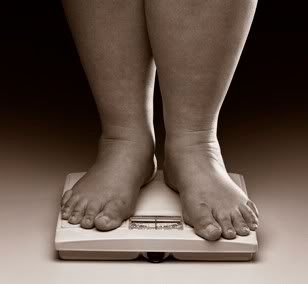
Americans seem obsessed with dieting to lose weight. Even though 90-95% of all diets fail, that doesn't keep them from trying, dreaming of looking like those models in the magazines.
Most people who diet will gain back the weight they lost, often surpassing it. Then they try another diet & repeat the cycle. This phenomenon of Yo-Yo-dieting is probably is worse than simply staying at the previous weight while reasonably active.

I have to admit right here that I am one of those lucky people who has never counted calories or carbs. I'm certainly not skinny (heavy-boned German with hefty boobs), and would never be picked for a bathing suit commercial, but luckily I've never been HUGE. I credit lucky genes for the largest part, and simply being fairly active. But the middle-age spread is catching up with me, and I could certainly use to shed a few pounds and tighten up the flab around the midriff ... But I'm determined to approach improving my weight&health without crazy dieting schemes.

Obviously being overweight is not healthy -- it increases the risk of heart disease, diabetes, yada-yada-yada. Enough already -- we already KNOW that! But then why can we not manage to keep our bodies healthy?

America is facing a weight/health crisis DESPITE the fact that we've been told for some 35 years that being overweight increases health risks, and that we ought to eat less saturated fats. So we buy products touting health claims of "Low fat", "reduced cholesterol" etc., and are still getting fatter and fatter. What gives?

Seems like we've been replacing saturated fats with the wrong kinds of fats, and we're filling up on empty calories. And our portion sizes (even our plate sizes) are bigger -- we're indeed eating significantly more calories than before we started the "lower fat diet". And we're less active than ever before. No wonder Americans (and many Western countries are heading the same direction) are getting fatter, and so are the kids: Childhood obesity is becoming a serious problem.
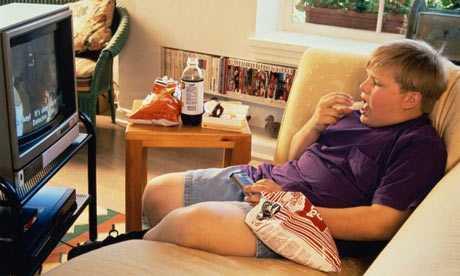
There are more and more overweight children, and our society seems not to know how to help them. Just telling the kids to "eat less and exercise more" is not cutting it -- adults are not exactly good role models in that department! How do you expect kids to get off the couch & onto their bikes if the adults drive everywhere in their cars, and think of the world as way too dangerous a place to step outside your front door?

Maybe this TV-watching kid is watching the documentary Supersize Me? Maybe he's already given up? In the kid's defense, genetics do play a role too, and he's probably not exactly inherited skinny genes -- but still, it's so sad to see him embarking so young on a lifetime of health problems!

QUESTION: Do we eat to live, or live to eat?

The problem with our Western diet is that we've lost touch with real food. Our ancestors would barely recognize what's on the shelves of our stores: long lists of ingredients, many of which we can hardly even pronounce. In his book In Defense of Food, Michael Pollan advises us to eat what our ancestors would recognize as food -- that is stay away from highly processed food stuffs, and eat real food, preferably grown locally, without heavy inputs of industrial agriculture (chemicals, fertilizers, etc.) -- his description of what goes on in feedlots might make you want to puke & forgo meat altogether!
I still maintain that humans are omnivores, and eating meat is a natural part of our biology, but we're certainly not meant to eat the huge amounts of animal proteins, or the amounts of refined simple carbohydrates (white flour and sugar) that have become standard in the so-called Western Diet.
Michael Pollan's book is fascinating, and I like his 7 simple words to guide us:
EAT FOOD. NOT TOO MUCH. MOSTLY PLANTS.

Here are two other books I read last year that dealt with some of the more psychological aspects of the problems people have with eating and weight control: Mindless Eating by Brian Wansink, and Intuitive Eating by Evelyn Tribole and Elyse Resch -- different approaches, but both very valid looks at the WHY: what goes on when we overeat, and how can we change that?
I learned a lot from both of these books. Sometimes we just eat unconsciously, or for emotional reasons. We've learned to ignore clues our own body/mind gives us about hunger or fullness. One interesting experiment that Wansick's team did was the "bottomless" bowl of soup: the bowl was being re-filled from below, and people kept on eating and eating, unaware that they were eating WAY more than usual. The comment when asked how they liked the soup was something like "That soup was really filling" -- yeah, they ate what, 4 or 5 bowls?!? But they thought they were eating their normal amounts!
The principles of eating more intuitively are also very helpful, whether you're just trying to get to a healthier weight and lifestyle, or struggling with major food issues such as eating disorders:
1. Reject the Diet Mentality
2. Honor your Hunger
3. Make Peace with Food
4. Challenge the Food Police
5. Feel your Fullness
6. Discover the Satisfaction Factor
7. Cope with your Emotions without using Food
8. Respect your Body
9. Exercise -- feel the Difference
10. Honor your Health -- Gentle Nutrition

One of the "aha" moments for me was how they explained that denying yourself certain foods (chocolate, for example) will end up making you crave that food, setting yourself up for a failure (in a "weak" moment you "cheat", then end up eating a whole box of chocolates, and feel like a total failure, your image of yourself is that you "failed" to control yourself, spiraling into further depression over food...) Instead, go ahead and give yourself permission -- if there are no "forbidden" foods, then these foods will lose that power over you, and you'll find yourself not craving it... This is such a gentler approach, and I think could really help people who are struggling with unrealistic expectations of diets and body image.

Another book I picked up recently is by Mark Bittman: Food Matters, where he advocates more "conscious eating" by eating less meat, more local produce, and reducing amount of highly-processed food -- for our health, AND for the health of our planet.
He mentions that he lost extra weight and saw a marked improvement in his health just by making these simple changes -- cutting out meat and processed food out of 2 of his 3 daily meals. Bittman writes that for him it worked well to eat "Vegan until 6pm", something it turns out also resonated with my husband, who is happily eating his veggies for lunch these days. I do wish he'd ask some whole wheat grains to that, because he he just gets so darn hungry when he gets home for dinner (I bet he'd do fine with Ramadan, where you have to wait until sundown to eat)! He has replaced his formerly high-carb midnight snack with fruit, a step in the right direction. Poor guy, he just gets so "peckish"...

For myself and my family, I'm just aiming for a greater awareness of healthy eating in our daily lives. Since we started buying our produce in CSA boxes and I started a blog (Borealkitchen) to guide me in cooking with all that produce -- well, I've noticed that my pants are sitting looser on my waist -- darn it, they won't stay up!

I think the biggest factor in eating healthier is that with more vegetables around, I eat less of other foods. I'm realizing just how easy it is to pick up processed foods -- they are everywhere! When I'm in the grocery store I try to make sure I don't shop hungry, and try to stay on the perimeter rather than in the middle isles where all the food comes in boxes. After all my reading I realize that they're full of empty calories ("refined" grains, which means the fiber and kernels are removed -- needing "enrichment" to put the nutrients back in!), and the long shelf-life was "bought" by replacing healthy (unstable) fats with unhealthy (hydrogenated) fats.

Does that mean no more OREOS for the kids' snacks?
I'm not trying out for the Ogre-mom of the Year award, but yes, I buy far less of that stuff , and try to get around to making healthier homemade treats more often instead.
It's not easy to keep our household supplied with "healthy" yet appealing snacks for the ever-hungry hordes that descend on the kitchen every few hours -- but somehow homemade baked goods or bananas with organic peanut butter is winning, and neither kid is starving or complaining too loudly. (And I have to add that both kids are thin as rails -- but so were hubby and I at their ages, the inevitable bulge around the middle did not set in until around 40!)

So I try to shop, cook and feed us healthy meals, keeping an even-keeled perspective (I see little point in getting into a religious fervor over food). I just want to stay healthy, balanced & make peace with food -- it's what keeps us alive and healthy, and we may as well enjoy it too.

Tuesday, January 27, 2009

The Trashy Romance Novel Challenge

This weekend I lay in bed with the flu, complete with drippy nose, sinus headache and a fever. Life went on around me, but I was not really part of it. There was plenty of Kleenex and tea by my bedside, but best of all, I had a novel to keep me company.

When we were on vacation in Lake Tahoe, my eldest daughter, my girlfriend and I were rummaging thru a bookshelf offering free books: they were all pulp fiction and trashy romance novels, and we challenged ourselves to find one to read. I had a tough time with that assignment, as I admit I'm usually a serious (cerebral), o.k. nerdy person, who just does not normally read these books.
But the challenge was made, and by gosh, I had to find a book! Besides, there was the LONG plane ride back to Alaska. So I did pick a murder mystery, and it sure made the flight go by faster than my knitting project alone could have.

Shortly after that, I picked up a novel at a used bookstore whose title and cover art intrigued me:


And it was a perfect book for when I was so miserable last weekend -- it was great to escape into my novel when I could not sleep but did not just want to lay there. It's about these 3 women who meet every week to knit, and their relationships with the men in their lives...

So, knitters & readers (esp. you other two of the 3 women searching the bookshelf in Tahoe): whichever one of you emails or comments on this post first, I will send you the book in the mail!