Showing posts with label Food. Show all posts

Tuesday, September 21, 2010

Why so much sugar?!?

I'm not anti-sugar, but really, why is it that American food is so super sweetened?!?

Today I bought a smoothie at the grocery store (having just finished a workout and needing something to hold me over for teaching). I usually make my own smoothies, but this morning I got out of the door and sort-of forgot to eat a substantial breakfast -- and I don't go too far on just a cup of coffee w/ biscotti.

Anyway, I bought this smoothie, a.k.a. "dairy beverage", and it was TERRIBLY sweet. Turns out to not only to contain HFCS (High Fructose Corn Syrup) but a long list of other ingredients like sucralose and other artificial ingredients I was not familiar with, and I could not get it down. Not wanting to waste food, I later tried to "thin" it down with some OJ and plain (unsweetened) yoghurt -- what a waste -- I still could not drink the stuff. YUCK! I finally tossed it.

Been another busy day today, and for dinner Liesl made us a quick pizza using a commercial pizza sauce (the one that comes in the Bobboli pizza crust package) -- yikes, again, way too sweet!

I keep on cutting sugar out of American recipes -- last week I made zuccini muffins in an attempt to make a dent in our zuccini stash -- I ended up cutting the recipe's sugar by half! The kids never complained: it was still plenty sweet...

So if you're wondering why I don't blog much anymore -- I'm too busy gardening, working and cooking from scratch...

Saturday, February 20, 2010

Felix & Pedro

Let me introduce them: they live on my kitchen counter.
Pedro is my "pet" a.k.a. sourdough starter, a live culture of bacteria and yeast, and I feed him every day with water and flour (but when we go on vacation, I store Pedro in the frig -- unlike pets).

We've been eating lots of home-made bread, everything from traditional sourdoughs to potato bread, whole wheat breads with sprouted grains, and rye breads. Recipes, trials and tribulations are posted at my rambling food blog, Borealkitchen.

Every weekend, I combine 1 cup of Pedro with 1/2 cup from the other jar, which I've name Felix (plus some oil and an egg). Then I fry up a batch of Sourjacks, or Sourdough pancakes. They are about as authentic Alaskan as you can get, and absolutely delicious! Exact recipe can be found here.

Why did I name them Pedro and Felix?
"Sourdough" is a nickname for old-timer Alaskans (especially miners), because in the Gold Rush days, the only way to get bread or pancake to rise without the use of Baker's yeast or eggs was, of course, by using a sourdough starter.

The "Sourdough" miner who first discovered gold in Fairbanks (which was our first Alaskan home, and where I first started regularly baking our daily bread) was an Italian immigrant named Felix Pedro --more about him and Fairbanks Gold Rush history here.

Tuesday, February 16, 2010

Fruit bats in Alaska?

Maybe the long Alaskan winters are getting to us.

I call my Youngest "my little fruit bat". She LOVES to eat fruit. While most kids crave sweets or carbohydrates, my little Pixie is always asking for fruit. Bananas, oranges, apples are currently our fruit staples during winter. But she's getting a little bored with the menu.

Youngest: Mom, next summer, could we PLEASE grow some fruit in our garden?
Me: Do you mean berries?
Y: Not just berries, lots and lots of fruit, like cherries, peaches, pears -- you know!
Me: But fruit trees don't survive our Alaska winters. Sorry!
Y: Ooops, I forgot! (Pause)

Y: Mom, can a human survive on just fruit?
Me: Not here in Alaska, but I suppose, if you include nuts, you probably could -- strictly speaking nuts are seeds...
Y: Yeah, I would like living on a tropical island: coconuts, pineapple, mangoes...
Me: ...papayas, jackfruit...
Y: What' that?
Me: I think we need a fieldtrip to Hawaii...

photocredit: http://www.fs.fed.us/r8/caribbean/wildlife-facts/2005/wildlife-facts_images_2005/jamaican_fruit_bat.jpg

Monday, January 4, 2010

Living greener by eating less meat

When I was young, I was a vegetarian for many years. Like many young people, I used to think in "black and white" terms: meat was bad, vegetables were good. I had read Frances Moore Lappe's book "Diet for a Small Planet" my first year in college (having just moved to the US after living in a developing country, I was aghast at the waste and conspicuous consumption) -- I became convinced that meat production was a waste of our planet's scarce agricultural resources. By the time I had children I started eating meat again -- in fact I craved it when I was pregnant!

I didn't give all that much thought to how food was raised as I was busy raising and feeding my growing family -- I was thinking less about the environment and more about cooking well-balanced meals and avoiding junk food! But it does turn out that meat production can be very wasteful indeed, and is perhaps becoming more so than when Lappe's book was first written! I'm now coming back around to thinking about those issue again. A big turning point for me was reading Michael Pollen's In Defense of Food and Barbara Kingsolver's Animal, Vegetable, Miracle.

As I've been learning more about where our food comes from, I find I don't care to eat industrially-produced meat, and the alternative (organic, local, wild) is much more difficult and expensive to come by. I have friends here in Alaska who will only eat meat they hunted or caught themselves -- but alas, hubby is not "into" hunting, and our freezer is already out of salmon fillets. ASIDE: in many parts of Alaska, churches and other non-profit organization have volunteers who will process road-killed moose, and the meat is donated to food banks (plus the volunteers get a cut -maybe I need to sign up in order to get some "church moose"?) -- since it is illegal for the driver of the vehicle to simply take home the moose they ran over! EOD, End of Digression.
I'm realizing more and more that not all meat (or eggs and dairy for that matter) is bad -- rather, it can vary greatly. For example, cows are naturally grass-eaters, but in an effort to grow beef faster and faster, they are now fed a diet of mostly corn (which is difficult for them to digest) and thus cattle are given lots of hormones and antibiotics. These are showing up in our drinking water! DNA analysis shows that between corn-fed hamburgers and HFCS (High Fructose Corn Syrup) that's used heavily in processed foods and sodas, Americans are starting to have a food signature that's mostly corn (an interesting movie to see is King Corn)!
The implications of how food is raised have huge impacts not only on the nutritional food value of our food, but on the health of our planet as well. So I'm finding myself eating less and less meat. I'm not a vegetarian, and I do think it's natural for humans to eat meat -- evolutionarily we're omnivores after all -- but yet, I feel less and less like eating industrially-produced meat.

This past year our family has been eating more vegetables, legumes and whole grains, due in part to getting a weekly CSA box full of fresh organic produce! And I must say that I feel healthier and even have lost some of that 40+something weight gain (without even trying -- I certainly am not the "dieting" type (more on that topic on my post Diet is a 4-letter word).

But really, how much meat do we really need to eat? Humans certainly can and do thrive on a mostly vegetarian diet. I admit that while I enjoy a good cut of meat, I find myself less willing to buy what's for sale at the grocery store. Right now I'm reading an interesting book by Nicolette Hahn Niman called Rightous Porkchop (Finding a Life and Good Food Beyond Factory Farms). The more I learn about the food industry, the more I want to get away from industrially-produced meat. I stand there in the grocery store and wonder: did this meat come from a CAFO (Concentrated Animal Feeding Operation) where animals are kept in horrible conditions, standing knee-deep in their own excriments while being fattened on corn products and kept from getting sick only by heavy administration of antibiotics? Were these eggs laid by chickens crammed into barns by the thousands, unable to walk even a few steps? Did the bacon come from pigs produced in a giant warehouse operation that produces more wastewater pollution than a small city?

I do recommend the movie Food, Inc (Santa brought me that for Christmas), which does a good job of reporting on food issues without being overly sensational. It makes a really good point about how we vote on food issues every time we're at the checkout stand of the the grocery store -- as our food purchases get scanned, we VOTE with our dollars: for example, as organic products are making more and more gains in the US/World market, industry is starting to pay attention! Within the last few years, our family has switched first to organic milk, then many of our vegetables, chicken and now also beef. And of course we do love eating our Alaskan Wild salmon!

I'm still working on figuring out eggs -- there are a few with the label "organic" and many more with the less meaningful label "natural". Some brands advertise they're antibiotic and additive-free, vegetarian-fed (= no animal by-products), and even cage-free. But does "cage-free" mean they really get to roam the farmyard, or did they get an itty-bitty "yard" attached to a giant facility that very few of the chickens can even get to? Vegetarian feed is better than ground up recycled dead chicks, but then again, eating bugs is actually an important and normal part of a chicken's diet...
Ideally I'd like to raise our own chickens, but I'm worried about the wildlife factor here: would raising backyard poultry act as an attractant to the many bears (black and brown) that occasionally roam our neighborhood? I wish I could find a good local source of eggs that don't cost an arm and a (chicken)-leg! These last few years I've been buying Wilcoxfarms Omega-3 eggs available at Costco (chickens that are fed grass-based diets do lay eggs that are higher in beneficial omega-3 fatty acids) -- but it's still part of a huge factory-style operation (I think?!) -- but then again, one step at a time: at least they're not as bad as some of the other industrial producers out there...

So here I am, puzzled. I go grocery-shopping (and vote!) every week, and I want to do what's best for my family and for my planet. My boys/men certainly do like their spicy food and meat, while my daughters and I would be happy eating mostly vegetarian. So the compromise I'm making is that I try to cook more and more with organic/local produce, and while I do cook with meat several times a week, I use smaller quantities than I used to. For example, I might use sausage more as a spice than a main ingredient, or make stir-fry or curry with more vegetables than meat. I've learned a couple of things over the last few years:
  • change seems easier when it's gradual.
  • if I cook too "healthy" and lean, then they eat more snacks/junkfood inbetween meals.
  • I am the queen of the kitchen:)
  • they will eat what I cook --an awesome power, I know -- and I'll try not to let that get to my head!

Photo credits:
Meat from http://upload.wikimedia.org/wikipedia/commons
Eggs from http://www.zetafarms.com

Thursday, November 12, 2009


It was my birthday yesterday, and I'm feeling great (despite the fact that the stomach flu is making the rounds in our household -- so far only through the male population!).
True, I'm another year older, but strangely, that does not bother me at all. I don't feel old, even though now I am as close as I can get to the big 5-0 without actually being there yet!
Here's a photo of moi, taken by hubby when we went blueberry-picking this fall. I usually don't like to have my picture taken, as I'm not photogenic at all. But on that particular beautiful fall day, I didn't mind him clicking away...

I'm a really lucky person: I've got a loving family, good health, and live in a really nice place!
I know that it's more luck than earned -- luck to have met and married a wonderful man (I suppose I can take some credit for having at least been at least a decent enough person) , genetic luck in that I have not inherited lousy DNA, and luck that the winds blew our little family to Alaska (the last great frontier!)

What makes me ponder this right now is that I recently received a real good rating when I applied for life insurance -- I got a clean bill of health! Apparently my health history and blood results indicate that I'm at a low risk to keel over from a heart attack anytime soon.
I can thank my parents for good genes -- on my father's side everybody seems to live well into their 80's without any heart problems, cancer, diabetes or Alzheimers. Watch out kids, you may not see any of that life insurance money for at least 30 years!

I'm truly lucky to be healthy. Besides inheriting healthy genes, I suppose I can take a little credit for a reasonably healthy lifestyle. What does that involve? What helps is not smoking or drinking (I do enjoy a glass of wine or beer a couple of times a week, however), sleeping well and not having a stressful life or job, eating reasonably healthy foods, and staying active.

I'm no sports nut, and certainly don't run marathons. But I do manage to be active everyday -- it may not seem much, but at a minimum, I guess I easily get those minimum recommended 20-30 minutes of light aerobic exercise every day. Most days that's just simply walking (lots), but it might also be gardening, snow shoveling or yoga.

Food is something everybody seems to be focused on these days, or even posessed by. Yes, I try to eat reasonably healthy, but I'm no health nut, either. In fact, I have a pretty healthy appetite: I eat a lot, and I have never really gone on a "diet". I'm not skinny, but not overweight either. But I do watch what I eat in the sense that I'm aware of what I eat -- what I aim for is to eat whole foods. By "whole" I don't just mean "wholesome", but also "real", as in not highly processed. As much as possible, that means fresh produce, whole grains, healthy proteins. But I also enjoy food, and if one day I feel like a Reese's Peanutbutter cup, by all means, if I crave one, then I have one. Preferrably just one, savor it, and then not have the need to eat another for a long time.
Depriving oneself of certain "forbidden"foods (such as chocolate or icecream) is just a bad mind game, in my book, and can lead to breakdown and overeating. I find myself doing much better around tempting desserts now that I've made "peace" by allowing myself simply to eat "anything". I am now often just as happy to have a carrot for snack, instead of a cookie, without feeling deprived. Perhaps this comes with age, because my younger self would have gone for the cookie!

Last, but not least, another factor in being healthy and happy, to me, is having a creative outlet. This is often not considered when people list necessary ingredients for health. But exercising the mind is as crucial as exercising the body. Without that, my life becomes rote, routine, listless. I need to have a creative outlet in my daily life, be it knitting or sewing, discussing politics, listening to music, cooking a good meal for friends and family, reading and/or writing. These are all things I can and will continue to do for many years to come.

I leave you with a story I read once about a very old lady who loved to quilt, and continued to quilt even when her eyesight had long gone dim. How did she do it? Whenever her grandchildren came to visit, she had them thread all her needles for her, and stick them into the curtains. Thus she always had a ready supply to keep on quilting...

I'm at the point now that I need reading glasses for fine print and threading needles, and pretty soon you'll be seeing me with a pair of granny glasses dangling around my neck from a beaded chain. But hopefully I'll have a smile rather than a frown on my wrinkled face!

Tuesday, November 3, 2009

Letter to a 5-year old friend

Dear Little One,

You and your family have been a part of our lives since long before you were born-- you're practically extended family to us, and feel sort-of like an auntie ( your Crazy German Aunt?).

You're VERY special to us, and we love you!

I'm writing to you because we have an issue with dinners when you come over to our house. Unfortunately, your behavior has become so much of a problem that it makes dinnertime unpleasant -- for me, the cook, for your parents and everybody else at the table. I hope we can find a way to turn that around.
First of all, let me assure you that to me, personally, it's not a big deal if you don't eat what I cooked. I'd love for you to try what I cooked, but if you end up not liking it, then that's that. No problem.
But I do have a problem when you fuss. When you whine "I don't like it!" or even say "Yuck" before we start eating -- well, that hurts my feeling. I think you can understand why: if you made your mommy a present, and she said "I don't like it" before she even opened it, that would really hurt your feelings, wouldn't it?

Your parents usually ask you to try new foods. You may not feel so adventurous, especially if it looks unfamiliar (crazy German food)? Your parents are just doing what all good parents do -- they ask their kids to give something new a chance. Because they know if you never tried anything new in your life, you'd still be living on breastmilk and baby food, and I bet you've come across many yummy foods since you ate strained peas as a baby!

So what I'm asking of you, please don't make such a big fuss when you eat dinner at our house. Here's a deal: First, give it a try. I'll serve you a small serving (one bite). If you don't like it, say so politely ("No more, thank you"). That's all. No big deal!
Hopefully there will be something at the dinner table that you do like. But if there is not, that's still not a reason to fuss.
You can ask nicely if there might be something else for you to eat, but there may not be (that will really be up to your parents -- they may choose to tell you there are no other choices). You won't starve, but you won't get dessert either.
At this point, you may start feeling very sorry for yourself. What always seems to happen with kids at this point is that they start a big fuss, trying to get their way. We've all done it at some point in our lives, and guess what, we found out the hard way that it's really not worth it!

Here's what I need you to understand: fussing will not get your way at my dinner table like you did the other night. From now on, I'm going to ask you (or any other kid fussing), to leave the table. It's really very simple. You're welcome back when you're calmed down and can be polite.

Oh, by the way, here's a hint: if you tell the cook when you do like a dish, that will not only make him/her smile, it will even make them cook your favorite foods more often!
PS: unless they're still on breastmilk , of course:)

Friday, October 30, 2009

Taxing sugar???


Americans eat (and drink -- in the form of sodas) way too much sugar: refined & high fructose corn syrup is showing up more and more in processed foods from breakfast cereals to salad dressings. In small quantities, these may be harmless, but the trend in our increasing unhealthiness among Western nations is alarming.

Obviously, just as it's not healthy for us to eat loads of fats, we should not consume all this sugar that's hiding in much of our food, and it contributes heavily (pun intended) to childhood obesity, heart disease, diabetes, etc. I wrote about this on a previous reflection post, entitled Diet is a Four-letter Word.

Recently, I got to thinking about something I heard on the radio one morning while barely awake when the alarm came on: a proposed tax on sugar in drinks, a penny per ounce on sugary drinks. Is that a good idea???


Pros

It would make us more aware of how much sugar we're consuming.

Some people would indeed change their habits.

The pinch in the pocketbook is not a hardship to the extend that sugary sodas are not nutrition we need: they're not "food" we need to sustain us (in other words, real food is not being taxed).

The money collected in taxes could be used for a good cause (education about dangers of childhood obesity, for example).

Cons
Diet drinks are not necessarily any healthier. Maybe they should be taxed too?!? For more info, here's more about the link between diet sodas, weight gain and diabetes.

Taxation for behavior modification is controversial -- would it really change behavior, or would people just start getting used to it after the initial "shock", and keep up the unhealthy habits..?

Would "natural fruit juice" start replacing refined sugar in most drinks, allowing manufacturers to charge a higher price, yet without significantly affecting the desired outcome, i.e. people still end up just as overweight on fructose as they do on sucrose...

Would the government end up being a "sugar police"? Is sugar the last legal drug...?

Hey, we're evolutionarily programmed to like sugar: we all know our early human ancestors had a better chance of surviving (and escaping the sabertooth tiger) if they found foods high in calories. But that's not the situation we're in, now is it?

I admit that I love dessert as much as the next person -- but I believe it should remain a special treat, rather than an abused substance!

Tuesday, September 1, 2009

Harvest time

There aren't many things that are as satisfying as harvesting your own food.
The blueberries are ripe now at the higher elevations, the rosehips are ready in our neck of the woods, and we've been eating lots of good stuff from our own garden now: zuccinis, carrots, kale, and even tomatoes!

It's the root crops that I find most intriguing to grow -- perhaps it's because we don't see the results of our labors, being hidden underground.

The carrots are truly sweet here in Alaska, benefitting from long daylight hours -- I could easily grow more next year. Beets are growing very nicely too, ready for Borscht soon. But the potato crop is my favorite. The plants may not look like much when they're growing in the garden, starting to turn a little pale-yellowish as the days get shorter -- but then comes the reward of the harvest!
I think of the Irish crofter, digging in the dirt, and each potato turned up is like a nugget of gold: it's the food that will sustain. I've read that as far as a poverty-crops go, potatoes (together with a few other crops like cabbages) are apparently fairly sound nutritionally.

Youngest and I have only dug up less than quarter of our potatoes and carrots so far, and they are wonderful. Sure, they're readily available at the grocery store and farmer's market.
But there's nothing better than that joy of watching my child serve carrots from her own garden plot at dinnertime: "I grew these!", and everyone agreeing that they've never tasted any better!

photo credit:
potatomuseum.com

Sunday, August 16, 2009

I nee a Project like I need a hole in the head

I just finished reading the book Julie & Julia, and am looking forward to seeing the movie with Eldest, my daughter known in blogland as "Kitchensister" -- she's a great cook and I'm sure we'll enjoy seeing what probably is best described as a chick-flick food movie (at least that's what I tell my hubby as to why I need to see this movie with Eldest instead of him!).
For those of you not familiar with the movie(click for trailer here), here's the essence:
29 year old NY secretary, Julie Powell, feels a need for a project, and takes on cooking all 500+ recipes in Julia Child's famous cookbook "Mastering the Art of French Cooking" and blogging about it -- setting herself the challenge of doing it all in year's time...

I just finished the book tonight, and I admit it, I enjoyed it -- it's about two women searching for meaning in life (Julia Child also started her cooking career late in life), and the process of embarking on the "Project" helps both woman find joy in their lives.

The natural consequence of my delving into this story is, naturally, a search for my own year-long personal "Project" and blog about it -- something that will change my life?!?!

Shall I cook my way through all of Paul Prudhommes' Cajun recipes -- that would make my husband VERY happy, and do no good to either of our waistlines? Nix that!

shall I be the perfect "Hausfrau" and actually keep a clean house for a year? Nix that!

shall I cook my way through a different cuisine or cookbook every week? Hey, I like that idea!

shall I pull a Barbara Kingsolver and cook only healthy organic local food for a year? Noble thought, but can't realistically pull that off here in Alaska! Nix that.

shall I spend the winter cataloguing and scapbooking 20-some years worth of family fotos, including an actual digital library that makes sense? Talk about a big job!

shall I make a handknit sweater and/or make a quilt for everybody on my Christmas list? See you in a few years-- I have enough unfinished objects (UFO) in my craft area that I don't need to start any new ones for a good year. Nix that!

shall I forget all about food and crafts and practice yoga until I have the perfect flexible body and find enlightenment too? Too esoteric...

shall I ... you fill in!

Thursday, July 23, 2009

Forensic Motherhood

Envision yourself coming home from an afternoon of shopping (dad gives mom of three kids a well-deserved break), and as mom walks up to her house, she finds it deserted. BUT, there is a trail of blood leading up the stairs, and the front door is wide open. What happened? Who got hurt? Where did everybody go?...
This happened to my mom some 40 years ago -- before the days of cell phones, or, apparently, before the days of pencil of paper. My mother nearly went out of her mind until my dad finally arrived back from the hospital, where my little sister had gotten stitches on her forehead, after having run into my brother on the swing (remember those wooden boards with sharp edges -- this was before someone smart designed the soft butt-hugging type that does not require surgery when you rammed another kid...)

Nothing that scary happened to me, but the other day I got home from work to a rather strange scenario, hubby having taken the kids to their music lessons in town.

Door is wide open...
I walk into the kitchen: there are 4 cereal bowl with the remains of milk and granola. I only have 2 kids living at home, so how is that possible? Easy, teenage son probably ate 3 bowls, and the 4th belongs to his little sister.
It gets better! I need to get some dinner started, so I turn to the stove. There is a black liquid oozing out from under the stove, and a yellowish-red powder dusting the counters and floor. Several pots and pans are on top of the stove, with various blackish-graying substances on them. Ahhh, now I remember, they had wanted to cook black beans for burritos -- Son had declared that he was tired of PB&J, and wanted to learn how to make burritos, from scratch!
I had soaked some black beans overnight. Instructions were to "cook until soft", mash them with a potato masher for "Refritos", then add spices. Turns out the pot of beans boiled over, explaining the black ooze. There was an attempt made to mash the beans BEFORE they were soft, which caused quite a few chunks of gray-black matter decorating my kitchen. Lastly, Son attempted to grind the spices -- problem was that he opened the lid while the blade was still spinning....

There are days where I would have been mad at the mess, but that day I only chuckled, being rather proud of myself for having figured out what happened. This is as close to CSI (=Crime Scene Investigation, which Germans would call a "Krimi" ) as I'll ever get -- I love watching the TV series -- the scientist in me enjoys a bit of detective work that goes into figuring out the clues left in the evidence at the scene of a crime...

Ahhh, the joys of forensic motherhood!

For the Black Bean recipe, go to my other blog, Borealkitchen

Photo credit to www.all-about-forensic-science.com for the blood spatter picture.

Sunday, May 17, 2009

Hurrah for Syttende Mai!


Today Norwegians celebrate Constitution Day -- and the only reason I know is that hubby used to hang out with a bunch of Norwegians in his college days and celebrate this day -- I'm sure there much drinking of Aquavit involved.

Today we celebrated Syttende Mai with a belated (or what the kids called "Fake") Mother's Day -- Eldest just got home from college this week (Hurrah!!!), and after a Welcome back BBQ on Saturday, the kids decided that mom deserved a day off from cooking, and get to do whatever she wanted, which they predicted, correctly, was gardening! Eldest even invited her friend Amy to help with the effort: to build and fill the new planting beds. Photos will hopefully follow soon -- but the boxes are looking GREAT. The girls were awesome -- we dug soil, cut and build the boxes, went to the greenhouse and bought plants, and went for a truck-load of horse manure. WHAT A PERFECT DAY.

And, on top of all that, Eldest planned and executed some incredible cooking:
Spring rolls for lunch
homemade pasta for dinner
grated carrot and broccoli salad with pine nuts
poached pear with ricotta & berry sauce for dessert

This was the BEST meal I've had cooked for me in a LONG time -- my daughter will write a post soon on my other blog, Borealkitchen, and share these recipes.
It's great to have her back -- even if it takes me longer now to find stuff in my own kitchen -- she's still needing to learn the logic of where I keep certain things...

Monday, April 6, 2009

What about those picky eaters?

What's a parent to do about picky eaters? I run a little Nature program for preschoolers with their parent(s), and after the program, most of them stay and eat together.
I love these kiddos -- and it's interesting for me to observe how the moms deal with their children's feeding. The kids vary from being great eaters to picky little f*ers, and the moms vary from being super-health-conscious to rather laissez-faire.

I came across an interesting blog discussion recently on "Eating Well" about how to get "veggies down" picky toddlers and kids. Check out the moms discussing how they get their kids eating veggies, including quite a bit of trickery. One of the funnier ones was a mom who swears that if you tell kids a dish is special "only for mom & dad, you kids would not like it", then the kids will REALLY want to try it too, LOL. I also liked what a blogging mom named "Daytona" wrote about her family's experience: "Growing Greener Broods" -- It got me thinking about parents' role in their childrens' eating habits.

Here's some free and unsolicited advise.
My qualification are merely that I'm a mom of 3 children range from 11 to 22, so I've been there done that... Even though I don't have toddlers anymore, and we don't really have any major food "issues" these days, I realize that I still have a huge influence on the two children remaining at home. I hope Eldest will comment on this post!

#1. Don't make eating a battle.
This one sounds simple, but I see food battles between parents and kids all the time. Many kids go through picky stages (most notably during toddlerhood) -- and you and they will get thru -- but please don't set the stage for them to have food issues for life...

#2 Model good eating behavior.
You need to eat your veggies too! Don't snack on empty calories between meals, in the car, etc...

#3. Keep on offering new foods alongside the regulars. Look at the bigger picture -- don't make it about the green beans at tonight's dinner. It's not that important, and they may just be "off" their feed tonight (or this month, or this...?) Keep some perspective: it's o.k. if they don't eat the green beans-- keep calm, and serve another healthy dinner tomorrow.
Variety is a good motto-- just keep on offering lots of choices. Intersperse new foods with their old stand-byes, so you don't fall into a rut of "same old". Kids can only expand their horizons if you offer it to them -- don't give up on them.

However, don't give in with junk food -- you can offer other healthy choices, but not junk foods, esp. not SWEETS!

Most importantly: Remember NOT to make mealtimes into power struggles.
And kids can be Masters at power struggles : then they control you (hee hee!)
If you make a big deal about how they won't get any dessert if they don't eat their green beans, and then later, after a lot of fussing, you give in and let them eat dessert, then the kid has WON. Lesson learned is "they may threaten me with no dessert, but in the end, I do get what I want!"


If they're still really young (toddlers), and they're putting up a real fuss at the dinner table: "Food up, Kid down." In other words, the kid's meal is over (end of discussion)-- they'll get a chance to eat in another hour/couple of hours. No, they won't starve, I promise.

Remember, you (the parent) can only control what goes on the table, but not what goes in the mouth! So don't go there! Choose your battles carefully, and give ultimatum ONLY if you (backed up by your spouse) can be consistent. (HINT: Let natural consequences work, rather than artificial punishments -- going hungry until the next meal is a natural consequence, getting sent to bed early while the other kids get to go play outside is not.)

If they're older, stay positive. "Thanks for trying that new dish. Sorry you didn't like it -- what would you do to make this tastier? If you're still hungry, there are some carrots/ apples..."

It could be that the particular food dislike is one they'll never end up liking (just think, are there foods that you just can't stand? Sauerkraut? Haggis?) Your kid has a right NOT to like a food, and needs to learn to deal with this politely -- teach them to say "No thank you" instead of "Yuck", and if you're lucky, the # of items on the Disliked-foods list will shrink as they get older...

Sunday, March 29, 2009

DIET is a four-letter word

The Anchorage Daily News Sunday section had an article today about a local woman who had participated in the TV reality show "World Biggest Loser" -- for non-TV people, like myself who have never seen this show, let me explain: This is a TV show where participants compete for a grand cash price, and subject themselves to a grueling regiment of crash-dieting and exercising in front of TV audiences until they meet their goals (some get "eliminated" along the way). I was dismayed at what this poor woman had gone through, and how she's still struggling with her weight and self-image 2 years later (and a baby) -- it just all sounded so unhealthy, in ways even creepy and sinister!
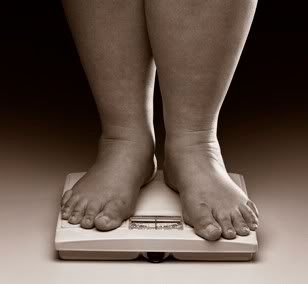
Americans seem obsessed with dieting to lose weight. Even though 90-95% of all diets fail, that doesn't keep them from trying, dreaming of looking like those models in the magazines.
Most people who diet will gain back the weight they lost, often surpassing it. Then they try another diet & repeat the cycle. This phenomenon of Yo-Yo-dieting is probably is worse than simply staying at the previous weight while reasonably active.

I have to admit right here that I am one of those lucky people who has never counted calories or carbs. I'm certainly not skinny (heavy-boned German with hefty boobs), and would never be picked for a bathing suit commercial, but luckily I've never been HUGE. I credit lucky genes for the largest part, and simply being fairly active. But the middle-age spread is catching up with me, and I could certainly use to shed a few pounds and tighten up the flab around the midriff ... But I'm determined to approach improving my weight&health without crazy dieting schemes.

Obviously being overweight is not healthy -- it increases the risk of heart disease, diabetes, yada-yada-yada. Enough already -- we already KNOW that! But then why can we not manage to keep our bodies healthy?

America is facing a weight/health crisis DESPITE the fact that we've been told for some 35 years that being overweight increases health risks, and that we ought to eat less saturated fats. So we buy products touting health claims of "Low fat", "reduced cholesterol" etc., and are still getting fatter and fatter. What gives?

Seems like we've been replacing saturated fats with the wrong kinds of fats, and we're filling up on empty calories. And our portion sizes (even our plate sizes) are bigger -- we're indeed eating significantly more calories than before we started the "lower fat diet". And we're less active than ever before. No wonder Americans (and many Western countries are heading the same direction) are getting fatter, and so are the kids: Childhood obesity is becoming a serious problem.
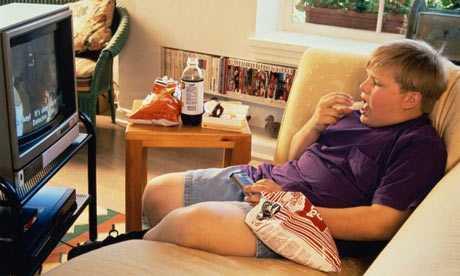
There are more and more overweight children, and our society seems not to know how to help them. Just telling the kids to "eat less and exercise more" is not cutting it -- adults are not exactly good role models in that department! How do you expect kids to get off the couch & onto their bikes if the adults drive everywhere in their cars, and think of the world as way too dangerous a place to step outside your front door?

Maybe this TV-watching kid is watching the documentary Supersize Me? Maybe he's already given up? In the kid's defense, genetics do play a role too, and he's probably not exactly inherited skinny genes -- but still, it's so sad to see him embarking so young on a lifetime of health problems!

QUESTION: Do we eat to live, or live to eat?

The problem with our Western diet is that we've lost touch with real food. Our ancestors would barely recognize what's on the shelves of our stores: long lists of ingredients, many of which we can hardly even pronounce. In his book In Defense of Food, Michael Pollan advises us to eat what our ancestors would recognize as food -- that is stay away from highly processed food stuffs, and eat real food, preferably grown locally, without heavy inputs of industrial agriculture (chemicals, fertilizers, etc.) -- his description of what goes on in feedlots might make you want to puke & forgo meat altogether!
I still maintain that humans are omnivores, and eating meat is a natural part of our biology, but we're certainly not meant to eat the huge amounts of animal proteins, or the amounts of refined simple carbohydrates (white flour and sugar) that have become standard in the so-called Western Diet.
Michael Pollan's book is fascinating, and I like his 7 simple words to guide us:
EAT FOOD. NOT TOO MUCH. MOSTLY PLANTS.

Here are two other books I read last year that dealt with some of the more psychological aspects of the problems people have with eating and weight control: Mindless Eating by Brian Wansink, and Intuitive Eating by Evelyn Tribole and Elyse Resch -- different approaches, but both very valid looks at the WHY: what goes on when we overeat, and how can we change that?
I learned a lot from both of these books. Sometimes we just eat unconsciously, or for emotional reasons. We've learned to ignore clues our own body/mind gives us about hunger or fullness. One interesting experiment that Wansick's team did was the "bottomless" bowl of soup: the bowl was being re-filled from below, and people kept on eating and eating, unaware that they were eating WAY more than usual. The comment when asked how they liked the soup was something like "That soup was really filling" -- yeah, they ate what, 4 or 5 bowls?!? But they thought they were eating their normal amounts!
The principles of eating more intuitively are also very helpful, whether you're just trying to get to a healthier weight and lifestyle, or struggling with major food issues such as eating disorders:
1. Reject the Diet Mentality
2. Honor your Hunger
3. Make Peace with Food
4. Challenge the Food Police
5. Feel your Fullness
6. Discover the Satisfaction Factor
7. Cope with your Emotions without using Food
8. Respect your Body
9. Exercise -- feel the Difference
10. Honor your Health -- Gentle Nutrition

One of the "aha" moments for me was how they explained that denying yourself certain foods (chocolate, for example) will end up making you crave that food, setting yourself up for a failure (in a "weak" moment you "cheat", then end up eating a whole box of chocolates, and feel like a total failure, your image of yourself is that you "failed" to control yourself, spiraling into further depression over food...) Instead, go ahead and give yourself permission -- if there are no "forbidden" foods, then these foods will lose that power over you, and you'll find yourself not craving it... This is such a gentler approach, and I think could really help people who are struggling with unrealistic expectations of diets and body image.

Another book I picked up recently is by Mark Bittman: Food Matters, where he advocates more "conscious eating" by eating less meat, more local produce, and reducing amount of highly-processed food -- for our health, AND for the health of our planet.
He mentions that he lost extra weight and saw a marked improvement in his health just by making these simple changes -- cutting out meat and processed food out of 2 of his 3 daily meals. Bittman writes that for him it worked well to eat "Vegan until 6pm", something it turns out also resonated with my husband, who is happily eating his veggies for lunch these days. I do wish he'd ask some whole wheat grains to that, because he he just gets so darn hungry when he gets home for dinner (I bet he'd do fine with Ramadan, where you have to wait until sundown to eat)! He has replaced his formerly high-carb midnight snack with fruit, a step in the right direction. Poor guy, he just gets so "peckish"...

For myself and my family, I'm just aiming for a greater awareness of healthy eating in our daily lives. Since we started buying our produce in CSA boxes and I started a blog (Borealkitchen) to guide me in cooking with all that produce -- well, I've noticed that my pants are sitting looser on my waist -- darn it, they won't stay up!

I think the biggest factor in eating healthier is that with more vegetables around, I eat less of other foods. I'm realizing just how easy it is to pick up processed foods -- they are everywhere! When I'm in the grocery store I try to make sure I don't shop hungry, and try to stay on the perimeter rather than in the middle isles where all the food comes in boxes. After all my reading I realize that they're full of empty calories ("refined" grains, which means the fiber and kernels are removed -- needing "enrichment" to put the nutrients back in!), and the long shelf-life was "bought" by replacing healthy (unstable) fats with unhealthy (hydrogenated) fats.

Does that mean no more OREOS for the kids' snacks?
I'm not trying out for the Ogre-mom of the Year award, but yes, I buy far less of that stuff , and try to get around to making healthier homemade treats more often instead.
It's not easy to keep our household supplied with "healthy" yet appealing snacks for the ever-hungry hordes that descend on the kitchen every few hours -- but somehow homemade baked goods or bananas with organic peanut butter is winning, and neither kid is starving or complaining too loudly. (And I have to add that both kids are thin as rails -- but so were hubby and I at their ages, the inevitable bulge around the middle did not set in until around 40!)

So I try to shop, cook and feed us healthy meals, keeping an even-keeled perspective (I see little point in getting into a religious fervor over food). I just want to stay healthy, balanced & make peace with food -- it's what keeps us alive and healthy, and we may as well enjoy it too.

Monday, March 16, 2009

St. Patrick, greens, and Omega-3s


Happy Saint Patrick's Day!
Hope you're planning a nice GREEN meal. And I'm not talking about green food coloring in your beer or mashed potatoes, I'm talking about serving leafy greens.

We KNOW that greens are incredibly good for us, but admit it, most of us don't eat enough greens! Besides the obvious benefits of fibers, vitamins and iron, antitoxins and phytochemicals, there are the Omega-3 fatty acids, which we've been hearing about more and more in recent years. Yet somehow our western (American) diet has largely selected against Omega-3. Why is that?

It wasn't until the 1980's that scientists learned the importance of Omega-3 (If you want to read about why Omega-3 are good for us, while Omega-6 are not, I recommend Susan Allport's book The Queen of Fats: Why Omega-3s Were Removed from the Western Diet and What We can do to Replace them). Scientists think now that maybe what matters most is the ratio of Omega-3's to Omega-6 (in other words, getting enough Omega-3 in relation to Omega-6 may matter more than absolute amounts of Omega-3s).

So where do these Omega-dudes hide?

Our western diet depends heavily on seeds, primarily on wheat, corn and soy. Seeds are full of Omega-6. Where do you get your Omega-3? You guessed it, leafy greens (and the wild ones are especially good sources). Omega-3's are part of the photosynthetic process -- ergo, they hide in greens and algae! Seafood is a good source of Omega-3's also, but really, fish just get theirs from seaweed and algae. Green plants is where it's at!

I loved Michael Pollan's book In Defense of Food. Pollan tells of how nutritionism and "Food Science" have messed up repeatedly-- the more they've tried to reduce food into nutrient components, the less healthy our diet has become! They've been telling us for years to eat a lower fat diet, and we've gotten fatter and fatter. For example, first butter was deemed bad, was replaced by margarine and hydrogenated oils, and then it turns out those are worse than the butter! Ooops. More recently nutritionists have discovered the health benefits of Omega-3, yet because Omega-3 is not very stable, plant geneticists have actually been breeding against it (because we wanted food with long shelf-lives)..! OOOOPS again.

My personal pledge is to serve more GREENS.
Let there be something green on our plates every day -- make every day St. Patrick's Day!

Spinach to the rescue!!!
Go over to my other blog Borealkitchen to find recipes.
For something GREEN, here is just a small teaser of ideas that make use of generous quantities of frozen spinach (always handy to have in your freezer) -- in other words, these dishes are good places to hide large quantities of the dreaded "Spinat"!

Lasagna, pizza, calzones, quiche
Soups (esp. blended soups which have a greenish color already)
Homemade spinach pasta (yumm!)
Omelettes, "Green Eggs and Ham"
Brownies (Honeypiehorse's trick: just blend the spinach first and replace part of the butter called for, and don't breathe a word! )

I therefore propose a toast to St. Patty, whom I nominate as the patron saint of green vegetables and Omega-3's:
May you ble
ss us with lots of greens in the coming year!

Saturday, February 28, 2009

I'm launching a new blog: Borealkitchen

No sooner have I cooked a meal and the fam has devoured it, I find myself scratching my head: what shall I cook for the next meal?
As a mom, I have to think about food a great deal of the time -- I need to procure it, store it, cook it, serve it, clean up after it. Further, my job description includes that it be timely, healthy, tasty, and appeal to the different family members.
Let's meet the players, shall we:

There are picky eaters: "But, MOM! You know I don't like..." That's not much of a problem in my family -- they're pretty good about eating a variety, willing to try new things, and mostly appreciate my cooking. I do occasionally hear "MOM, you're the best cook!" Music to my motherly ears...

There are hungry fuckers (pardon my French) who walk in the door "I'm starving! What can I eat. NOW?!?" They can't possibly wait for dinner...

There are the sceptics: "What's in this -- what are these green/brown/red/purple things?".
Plus, I frequently get asked the question of "What's for dinner?" in the middle of the afternoon, and woe to me if I don't have an answer...

There are the condimenteurs (my own term), who feel everything tastes better if you add salt/sugar/ketchup/peanut butter... For crying out loud, can't you just taste it first without ruining it?...

And last, but not least: "Is that all?" and "What's for dessert?"

So, I've started writing about my family's adventures with food in my new blog Borealkitchen.

When I was in college, I read Francis Moore Lappe's Diet for a Small Planet, and it rang very true for me, and I promptly became a vegetarian -- to save the planet! That lasted less than a decade: when I was pregnant with my first child, I started craving meat, and realized my body needed the protein, iron, etc. I still love vegetarian food, and prefer a diet that's not too centered on meat, but believe that humans are squarely in the omnivore category.
Last year, my eldest daughter (in college), who knows and thinks a great deal about food and is also an excellent cook, suggested I read Michael Pollen's In Defense of Food and Barbara Kingsolver's Animal, Vegetable, Miracle. Excellent books, very thought-provoking.

So we're trying to eat more local food (we buy a weekly CSA box & farmer's markets), we've always enjoyed Alaska's wild harvest (salmon, blueberries, etc.), plus there's the good old grocery store. I personally don't tend toward extremism, and can't see my family repeating Kingsolver's experiment of eating only local organic food (much as I admire that, it's very difficult here in Alaska) -- but I'm becoming more and more aware of how our food is produced.

Middle child Wolf (high school freshman), was assigned to read Pollen's writing in his science class this week. Bravo to the teacher: what an excellent assignment -- great discussions! Like the rest of our family, this child is always thinking, questioning, wondering.
Yesterday over dinner I witnessed the following exchange with dad:
son: "Are organic vegetables really better for you?"
dad: "Marginally. But organic is better for the planet."
son: "Yeah...I can see that. Less chemical fertilizers and pesticides, right?"

Alleluja, the next generation is on board! One meal at a time...

Monday, November 17, 2008

Heute back ich...

Today I baked, and generally spent the day in the kitchen.
It was a very foggy gray Monday, perfect for letting bread rise by the fireplace. I made one loaf of whole-wheat bread ( I love the german word "Vollkorn", meaning full kernel), and the other loaf was my own version of Stollen-esque sweet breakfast bread: full of dried fruit, with swirls of almond paste. The fam loves it toasted in the morning with a butter and cinammon sprinkles.
Here's my newest concoction (idea gleaned from a Portland breakfast buffet):

CINNAMON-HONEY BUTTER
Cream together soft butter, cinnamon and honey
Keep in small jar by the toaster -- scrumptious!

My newest kitchen tool (B-day present) is a Cuisinard Mini-Food processor, perfect for small batches of anything.
Tomorrow I plan to make a BERRY SPREAD:
Thaw out some frozen berries from last summer, and process with butter or cream cheese until you get a deep purple "mush".

My other kitchen adventures (besides some overdue cleaning, like the inside of the microwave, etc), was to smoke a batch of red salmon. Friends gave us their older salmon this summer from their freezer when the new catch came in. Here in Alaska many people go dip-netting, and may catch 30 salmon for their families. It's a treat for us, but many Alaskan children say "Oh no, salmon again for dinner!" -- but ours at least do love their smoked salmon, esp. if it's made into souffle.

For smoking salmon, I make a simple brine: 1 qt water w/ half cup each of sugar and salt.
I soak the fish in the brine for about 4 hours, then rinse it, pat it dry (best to let it sit a little), then place in smoker for 6 hrs or so. It was pretty cold outside today, so it was a rather cold smoking, but it still works fine to do it in winter, even if temps are in the teens.
In fact, one real advantage is that I worry less about the wildlife (Summer fish smoking is apt to attract the bruins!)

Tonight we had pasta with smoked salmon in a cream sauce. It was a day well-spent in the kitchen!


Photo credits:
Baking painting by Mustafa Farroukh (1945) from LeMonde website
Bread cutting painting from Sharpiron.wordpress.com
Smoked salmon by kasilofseafoods.com

Friday, October 3, 2008

Alaska Harvest

It's harvest time. We got our first slushy snowflakes (mostly rain though) yesterday.
I'm stocking up on potatoes and other produce from the Farmer's Market, which is in its last week. Some of my favorites are the purple varieties!
Potatoes grow very well here -- but mine did not make it this year. My potato patch is located over the septic area we feared needed to be torn up (phew -- it didn't!) but that explains the general neglect!
Most years my cabbages are harvested by the moose before I get to them -- so now I'm growing them in pots -- still got some kohlrabi hanging under the house eves.

Growing tomatoes is not really possible without a greenhouse. I have 2 potted tomato plants I've been babying since May, carrying them in and out of the house depending on the weather. They produced some decent grape/cherry-sized tomatoes. BUT... thanks to the South Dakotan branch of the family, we recently received a box of the tastiest, juciest big tomatoes (Thanks, Jerry!)
Our Alaskan friends and neighbors are so JEALOUS!